 snaph5.com
Two Voices, One Skull, No Time: Cyberpunk 2077 and the Fight Over Who Gets to Be You
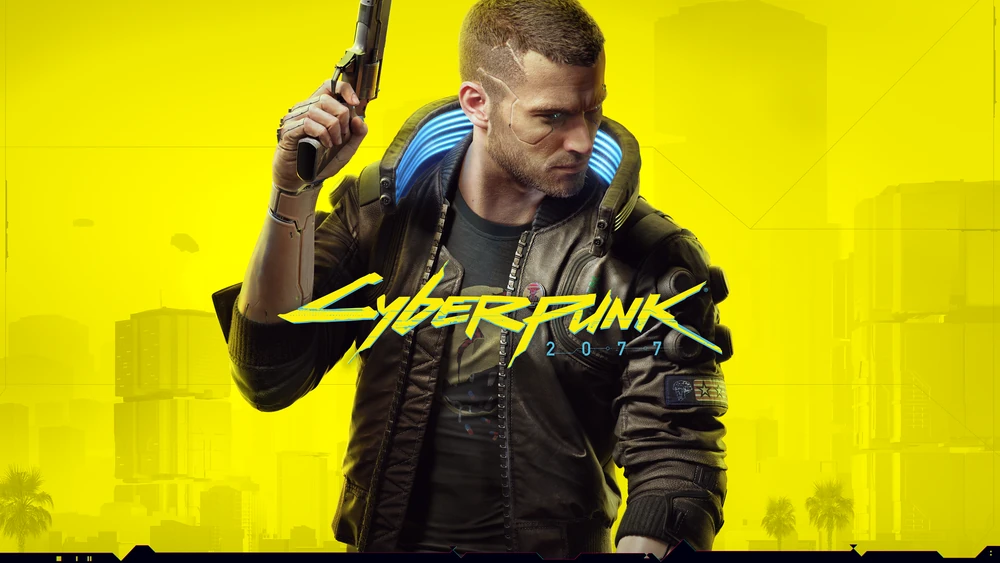
The most important scene in Cyberpunk 2077 is not a gunfight or a chase. It is a quiet moment of recognition, right after a heist goes wrong, when you realize there is someone else in the room who is not in the room at all. A man in a battered jacket leans against a wall you cannot touch, speaks in a voice only you can hear, and treats your body as a shared apartment he has no intention of leaving. He is funny, abrasive, and unmistakably himself. He is also dead, in the sense that matters, and he has been stored in a chip lodged inside your skull, and the longer the chip sits there the more of you it replaces. The game’s central premise, which sounds like a gimmick when summarized, is actually a very serious question dressed in leather and neon: when two people occupy one life, who gets to be the person that life belongs to?
CD Projekt Red released Cyberpunk 2077 in December 2020 to one of the most turbulent launches the industry has seen, and the story of what happened afterward has become almost as famous as the game itself. A long run of patches, a major overhaul in 2023 alongside the Phantom Liberty expansion, a further update in 2025, a port to Nintendo Switch 2, and, as of this month, a patch that folds content tied to the Edgerunners anime into the game, have turned a troubled release into a widely respected one. Sales have passed forty million copies, and Phantom Liberty alone has sold more than fifteen million. But numbers and redemption arcs are not the interesting part. The interesting part is that the game’s famously rocky history rhymes with its own story, because Cyberpunk 2077 is, at heart, a game about borrowed time and the struggle to become something worth being before it runs out.
The Chip and the Clock

The setup is brisk. You play V, a mercenary clawing your way up through Night City, a sprawling megacity that treats ambition as a commodity and failure as a business model. You and a partner take what looks like the job that will make you rich, and it goes catastrophically wrong, and you walk away from it carrying a prototype biochip called the Relic. The chip does something no technology should: it holds the digitized personality of a rock star and terrorist named Johnny Silverhand, played with irresistible swagger by Keanu Reeves, and it is slowly overwriting your own mind to make room for his.
What elevates this from a clever hook to a genuine engine is the way the game turns it into a clock. You are not just carrying a passenger. You are being replaced, a piece at a time, and the process is irreversible unless you find a way out. Every mission you accept, every relationship you build, every errand you run becomes tinged with the awareness that the person doing these things may not be around much longer. The urgency is never delivered as a countdown timer, which would be crude. It is delivered as atmosphere, as a low hum of dread beneath the rest of the experience, and as the gradual realization that your time is not infinite and your choices are not free.
This is what makes the structure so effective. A typical open-world game tells you the stakes are enormous and then lets you wander for fifty hours while the apocalypse waits politely. Cyberpunk 2077 tells you the stakes are personal and finite, and then trusts you to feel the pressure even while you stop to eat noodles at a street stall. The tension between urgency and freedom is not a flaw in the design. It is the design.
A City That Sells You Versions of Yourself
To understand why the central conflict lands so hard, it helps to understand the world around it. Night City is a place where identity is something you purchase. Cyberware, the implants and augmentations that fill the game’s economy, lets people rebuild their bodies piece by piece: faster reflexes, stronger arms, sharper eyes, hidden blades. The technology promises transcendence and delivers a ledger. Every upgrade is a transaction, and every transaction takes a little of the person who made it.
The game is acutely aware of this, and it builds a quiet argument about the cost of self-improvement. The more you modify yourself, the more the city’s logic seeps into you, and the further you drift from whoever you were before. The idea of cyberpsychosis, the breakdown that comes from too much augmentation, is the game’s most vivid expression of the principle. It is not a moral lecture. It is a mechanical and narrative reality: in this world, the body is a product, and the self is a subscription you can lose.
That framing gives Johnny’s presence in your head a deeper resonance. He is not an alien intruder in an otherwise stable identity. He is the extreme version of what the whole city does to everyone, a different way of being overwritten by something larger and more insistent than yourself. The people V meets are all negotiating some version of the same problem: how much of themselves they are willing to trade for security, power, or survival. The game keeps asking, in a hundred small ways, what you would be willing to sell.
Johnny as a Rival Autobiography
The relationship between V and Johnny is the emotional core of the game, and it works because it refuses to be simple. Johnny is charismatic, destructive, selfish, and occasionally wise, and he treats V with a mixture of contempt, curiosity, and reluctant affection that evolves as the story progresses. He is not a villain, and he is not a mentor. He is a rival, a person with his own story, his own wounds, and his own claim on the life you are both living.
What makes the dynamic compelling is that the game lets you decide what kind of relationship to build. You can clash with him, tolerate him, bond with him, or try to ignore him, and each approach shapes how the story unfolds. The writing is sharp enough that these choices feel meaningful rather than cosmetic, and the performances, both from the actor who voices Johnny and from the voice cast who bring V to life, give the exchanges a texture that few games achieve.
There is also a subtle formal brilliance in the way the game uses Johnny to dramatize its own themes. His memories, which you experience through the Relic, show you a different version of the world, a man who fought and failed and left behind a legacy that people interpret in contradictory ways. By setting his story against yours, the game creates a kind of dialogue between two autobiographies, one finished and one still being written, and asks which of them has the right to define what happens next. It is a smart way of exploring the question of identity: not by lecturing about it, but by putting two competing answers inside the same skull and making you listen to both.
The Small Stories Are the Real Argument
For all its focus on the central conflict, much of what makes Cyberpunk 2077 memorable lives in its side stories. The game is full of characters whose arcs run parallel to V’s, and the best of them are small, specific, and quietly devastating. A nomad who dreams of leaving the city, a braindance editor trying to protect someone she loves, an aging rock star confronting his own irrelevance, a veteran haunted by choices he made decades ago: each of them is wrestling with a version of the same question, how to remain yourself in a place that keeps trying to turn you into something else.
This is where the game’s structure pays off. Because the main story is urgent and personal, the side stories become acts of defiance, small moments where V chooses to spend limited time on people rather than power. The game does not force you to do this. It simply makes the choice meaningful, and it rewards you with some of its best writing. Spending an evening helping a friend with a personal problem, when you know your own clock is ticking, carries a weight that the same errand would not carry in a game where time stretched forever.
The result is a world that feels lived-in and morally textured. Night City is not a backdrop for your story. It is a collection of people, each with their own stakes, and the way you treat them says something about who you are. The game never grades you on this, but it remembers, and the cumulative effect is a sense of authorship over your own version of V that is hard to find elsewhere.
Phantom Liberty and the Cost of a Deal
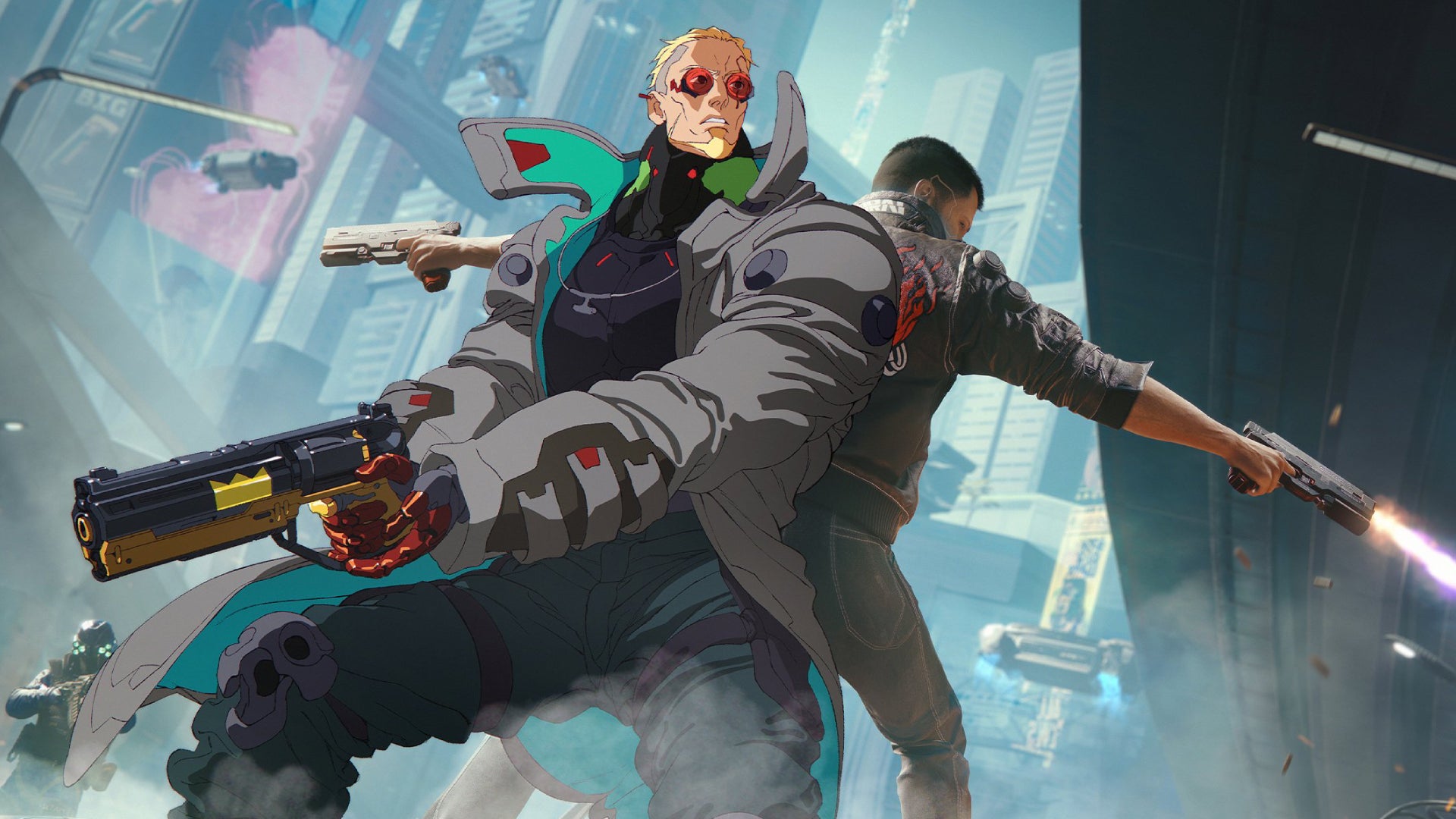
The Phantom Liberty expansion, released in 2023, takes the game’s themes and turns them toward espionage and betrayal. Set in a walled-off district called Dogtown, it drops V into a political thriller where trust is a liability and every ally has a hidden agenda. The expansion has been widely praised, with critics describing it as one of the great expansions of its era, and it earns that reputation by deepening rather than diluting the central ideas.
The key insight of the expansion is that it gives V a new kind of problem: not just a chip in the head, but a series of deals with people who are happy to use your desperation against you. Every offer comes with a price, every favor is a hook, and the question of who you can trust becomes inseparable from the question of who you are willing to become. It is a sharper, tighter, more focused story than the base game, and it works as a reminder of how much of Night City’s moral landscape is built on transactions.
The expansion also demonstrates what the game’s later patches made possible. The reworked systems, the improved police behavior, the refined skill trees, and the overhauled progression all combine to make Phantom Liberty feel like the confident, mature version of what the original release was reaching for. It is a rare case of a game’s second act clarifying and elevating the first.
A Game That Was Also Running Out of Time
It is impossible to discuss Cyberpunk 2077 without acknowledging its launch, and doing so actually enriches the central argument. The game arrived in a state that many players found unacceptable, with technical problems, missing features, and a gap between marketing and reality that damaged the studio’s reputation. For a while it looked like the project might be remembered as a cautionary tale.
What happened next is one of the more remarkable turnarounds in the medium. A sustained program of patches and updates addressed the most serious problems, a major reworking of core systems arrived in 2023, and further refinements continued through 2025, culminating in the version that many consider the definitive experience. The game was ported to Nintendo Switch 2 as a launch-era title and has received continued support since, including a recent update, patch 2.5, that integrates content connected to the Edgerunners franchise. Reports have also circulated about technical hiccups on the new platform, which is a reminder that the work is never entirely finished.
There is something poetic in this. A game about being overwritten by a different version of yourself spent years overwriting itself, patch by patch, until the game that exists now is quite different from the one that launched. It is a strange kind of redemption story, and it gives the experience of playing the finished version an extra layer of meaning. You are not just exploring a world. You are witnessing a project that fought its own flaws and, to a remarkable degree, won.
Where the Chip Misfires
Even in its improved form, Cyberpunk 2077 has real limitations, and an honest review has to name them. The most persistent criticism is that Night City, for all its visual density and atmospheric brilliance, does not always behave like a living ecosystem. The city looks alive, but its inhabitants can feel more like set dressing than participants, and the open world’s reactivity to your actions is thinner than the premise suggests. Systems like police response, crowd behavior, and emergent encounters have been improved, but they still lack the depth of the best simulation-driven worlds.
A second issue is the tension between the main story’s urgency and the invitation to roam. The game wants you to feel pressure, but it also wants you to explore, and the two impulses do not always coexist comfortably. Players who rush the main plot may miss the richness of the side content. Players who linger may find the urgency of the central conflict dulled by the sheer volume of things to do. It is a difficult balance, and the game does not always strike it perfectly.
A third concern is the way some of the mechanical systems feel less ambitious than the narrative. The combat is capable and often satisfying, and the range of approaches, from stealth to hacking to straightforward firepower, gives players real freedom. But the progression and equipment systems, while improved, can feel more like a framework than a fully realized economy, and some players will find the loot and crafting less compelling than the writing.
Finally, the endings, while emotionally resonant, are relatively few and tightly constrained compared to the sprawling branching of the rest of the experience. The choices you make throughout the game shape how you arrive at them, but the destinations themselves are limited, and some players will find that the finale does not fully reflect the diversity of the journey that preceded it.
Who Should Play It, and How
A few practical thoughts for anyone considering the game:

- If you love story-driven RPGs, this is one of the strongest narratives in the medium, with characters and performances that linger.
- If you were put off by the launch, the current version is a different experience, and it is worth revisiting with fresh expectations.
- If you like choosing how to approach a problem, the combination of stealth, hacking, and combat gives you a wide palette.
- If you want the full experience, play the base game and Phantom Liberty together. The expansion is not an optional extra but an integral part of the story.
- If you prefer tight, systemic open worlds, temper your expectations. The city is a stage more than a simulation.
The Verdict
Cyberpunk 2077 is a game about a question that does not have a comfortable answer: when something else is living in your head, and the clock is running down, what does it mean to be yourself? It asks that question through a rock star’s ghost, a city that sells identity by the pound, and a cast of characters who are each negotiating their own version of the problem, and it answers it not with a lecture but with a lifetime of choices.
It is flawed, ambitious, uneven, and unforgettable, and the gap between what it set out to be and what it launched as makes its eventual achievement all the more striking. The version that exists now is a confident, emotionally powerful work with some of the best writing and performances the medium has produced. It does not solve the mystery of who gets to be V. It does something better: it lets you feel the weight of the question, one borrowed day at a time, and it leaves you with the uneasy, exhilarating sense that the answer was yours to write all along.