







Mastering the Shifting Sands: A Definitive Strategic Guide to DuneCrawl
DuneCrawl is not merely a test of endurance; it is a brutal symphony of resource management, thermal physics, and tactical positioning set against an unforgiving desert backdrop. Unlike standard dungeon crawlers where health is your primary concern, DuneCrawl introduces the "Hydration-Thermal Axis," a dual-gauge system that dictates every action from the first step into the dunes to the final confrontation at the Spire of Salt. To survive, a player must transition from a reactive scavenger to a proactive architect of their own survival, understanding that the desert is an active participant in every combat encounter. This guide delves into the deep-tissue mechanics of the game, offering a blueprint for high-level play that transcends basic survival.
1. Initial Descent: Optimizing the Morning Cool-Down
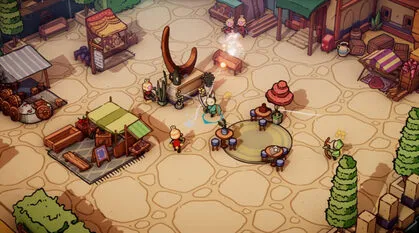
The first thirty minutes of a DuneCrawl run are the most critical for setting a "Thermal Ceiling." During the early morning phase, the ambient temperature is at its lowest, meaning your internal heat sinks operate at 120% efficiency. This is the only time in the game where heavy armor—specifically the "Chitinous Shell" or "Iron-Weave Cloak"—does not impose a movement penalty due to overheating. Smart players will use this window to engage in high-intensity skirmishes with Dune-Reavers, securing early-game biomass before the sun reaches its zenith.
During this phase, you should prioritize "Moisture Retention" upgrades over raw damage. The early game is about building a buffer. If you can secure a "Dew-Collector" relic within the first three nodes, you essentially bypass the mid-game hydration crisis. This allows you to path toward "High-Heat" zones later in the day, which house rarer loot but are inaccessible to players who spent their morning chasing minor combat rewards.
2. Navigating the Thermal Peak: The Mid-Day Static Defense
When the game clock hits the 12:00 "Solar Flare" event, the movement-based gameplay of DuneCrawl shifts into a static survival horror. Every step taken in direct sunlight during this period generates "Heat Friction," which stacks exponentially. The guide to surviving this period is not movement, but "Burrowing." Utilizing the "Shovel" tool or the "Geomancy" perk to create temporary sub-sand shelters is the only way to prevent your Hydration meter from plummeting.
Survival Tactics for Solar Peaks:
- Shadow-Pathing: Only move through tiles adjacent to "Rock Monoliths" to utilize the 15% cooling bonus.
- Inventory Purge: Drop non-essential metal items. Carrying "Heavy Iron" during the peak increases thermal conductivity, causing passive HP loss.
- Consumable Timing: Never drink "Purified Water" unless your Hydration is below 10%. The game rewards "Dehydration Resilience" buffs that only trigger at critical thresholds.
3. Advanced Combat: Exploiting Sand-Friction and Footing

Combat in DuneCrawl is governed by the "Stability Variable." Standing on a dune slope gives you a "Gravity Momentum" bonus for downward strikes but incurs a 40% miss chance due to shifting sands. To master the combat, you must learn to manipulate the enemy’s footing. Using "Sand-Sling" abilities to turn "Solid Ground" tiles into "Quick-Sands" is a more effective way to win boss fights than raw DPS. When an enemy is in a "Sinking" state, they take double damage from piercing weapons.
Weapon Synergy Breakdown
The Bone-Dagger (High Speed)
The Bone-Dagger excels in the morning and evening. Because it doesn't conduct heat, you can use the "Frenzy" skill without self-inflicting "Heat Stroke." Pair this with the "Blood-Moist" perk to regain 1% hydration per critical hit.
The Solar-Lance (High Damage)
This weapon is a double-edged sword. It deals 3x damage during the Solar Peak but increases the user's internal temperature by 5 degrees per swing. It should only be used by players with the "Insulated Skin" mutation or those standing in "Oasis" tiles.
4. Resource Alchemy: The Art of Water Distillation
In DuneCrawl, water is not just for drinking; it is a localized cooling coolant for your gear. The "Distillation" minigame found at campfires is where runs are won or lost. Instead of simply purifying sand-water, players should aim for "Heavy Water" variants by mixing "Salt-Crystals" and "Cactus-Pulp." Heavy Water provides a "Thermal Shield" for 300 seconds, allowing you to ignore the effects of sun-scorch.
This chemical management extends to your "Stamina" pool. The more water you carry, the more stamina you consume while sprinting. Advanced players maintain a "Lean-Flask" strategy: carrying only enough water for the next two nodes and relying on "Blood-Vial" harvesting from desert fauna to bridge the gaps. This keeps your weight low and your dodge-frames high.
5. The Nocturnal Shift: Mastering Cold-Snap Mechanics
When the sun sets in DuneCrawl, the threat shifts from "Hyperthermia" to "Hypothermia." The "Cold-Snap" mechanic reduces your movement speed by 2% every minute unless you are near a heat source. However, the night also reveals "Luminescent Tracks"—hidden paths that lead to the "Ancient Vaults." Navigating the night requires a complete reversal of your daytime strategy: you must now seek out the metal items you discarded earlier to retain body heat.
Night-time exploration is the only way to find "Moon-Silk," a crafting material required for the final boss’s armor. To optimize your night runs, use "Fire-Pot" consumables strategically. Don't throw them at enemies; drop them at the entrance of a tile to create a "Heat Zone" you can retreat to after kiting mobs. This allows for "Elastic Combat," where you bounce between the freezing darkness and the safety of the flame.
6. Perk Synergies: Building the "Mirage-Walker" Archetype
The leveling system in DuneCrawl is non-linear. To build a "Mirage-Walker," you must ignore the "Strength" and "Agility" trees in favor of "Perception" and "Metabolism." The core of this build is the "Heat-Haze" perk, which gives you a 50% dodge chance when your internal temperature is above 100 degrees. By intentionally keeping yourself on the verge of heatstroke, you become virtually untouchable in combat.
Essential Perk List for High-Level Play:
- Salt-Lungs: Reduces the oxygen penalty in "Dust Storm" events by 80%.
- Glass-Step: Walking on "Sand-Glass" (created by fire damage) increases movement speed by 20%.
- Osmosis: Passive hydration gain while standing in "Mist-Clouds" or "Blood-Mist."
7. Boss Strategy: Deconstructing the "Sand-Wurm" Logic
The Sand-Wurm is the first major wall for new players. The trick to this fight is not attacking the head, but targeting the "Rhythmic Vibration" points. The Wurm tracks you based on your "Pulse" meter. If you use the "Stillness" herb before the fight, the Wurm becomes blind, allowing you to plant "Blast-Sprains" along its segment lines.
During the second phase, the Wurm will create a "Sand-Vortex." Do not run away from it. Instead, jump into the center with a "Paraglider" or "Wind-Cloak." The upward draft allows you to perform "Aerial Plunges," which deal massive structural damage to the Wurm’s chitin. This fight is a test of whether you have learned to use the desert's physics against its own inhabitants.
8. Ecological Navigation: Decoding the Dust Storm
Dust Storms are random events that reset the tile layout of the current act. While most guides suggest hiding, advanced players use the storm to "Reroll" their environment. If you are in a "Loot-Poor" zone, staying out in the storm and using a "Compass" relic allows you to navigate to the "Eye of the Storm," where the rarest "Wind-Worn" chests are spawned.
Storm Navigation Hierarchy:
- Tier 1 (Red Cloud): Extreme damage; requires "Goggles" and "Filtration Mask."
- Tier 2 (Yellow Cloud): Moderate damage; causes "Blindness" status; use "Sound-Pings" to find exits.
- Tier 3 (White Cloud): Static electricity; disables "Energy" weapons; best for melee-focused builds.
9. The Spire of Salt: The Final Endurance Test
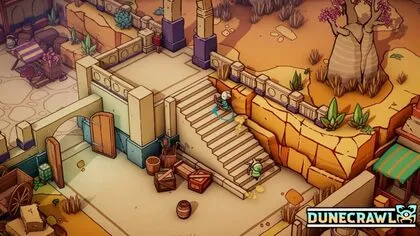
The final act of DuneCrawl takes place inside the "Spire of Salt." Here, hydration is no longer an issue, but "Corrosion" is. The salt-rich air eats away at your armor and weapon durability every 60 seconds. To survive, you must "Oil" your gear using "Fat-Tallow" harvested from the "Great-Bears" of Act 2. If your weapon breaks inside the Spire, you are forced to use "Salt-Shards," which deal high damage but cause self-bleeding.
The Spire is a vertical gauntlet. Each floor increases the "Atmospheric Pressure," making jumps shorter and stamina costs higher. The guide for the Spire is "Speed-Climbing." Ignore the minor mobs and focus on the "Steam-Vents." These vents can launch you up two floors at a time, bypassing the "Corrosion Halls" entirely. It is a race against the decay of your equipment.
10. The Ascended Strategy: Meta-Gaming the Death Loop
In DuneCrawl, death is not the end, but a "Seed-Planter." When you die, the items you were carrying are buried in the sand and can be recovered in the next run as "Cursed Relics." A common high-level tactic is the "Suicide Run," where a player intentionally carries a "Legendary Core" into a difficult zone and dies. In the subsequent run, that core will have evolved into an "Ascended Core," offering double the stats.
This meta-strategy requires a deep understanding of "Zone Persistence." Not all zones save your items. Only "Hallowed Grounds" and "Oasis Hubs" allow for item evolution. Mastering the death loop turns DuneCrawl from a traditional roguelike into a long-form strategic investment game, where your current failure is simply the foundation for your future victory.
Conclusion
DuneCrawl is a game of shifting balances and thermal mastery. Success is found not in the strength of your sword, but in the efficiency of your canteen and the coolness of your skin. By understanding the rhythmic nature of the desert—the morning rush, the mid-day sanctuary, and the nocturnal hunt—you transform from a victim of the sands into the master of the crawl. The desert does not care for your valor; it only respects your preparation. Take these strategies, monitor your gauges, and may the winds favor your path to the Spire.