.webp)



Introduction
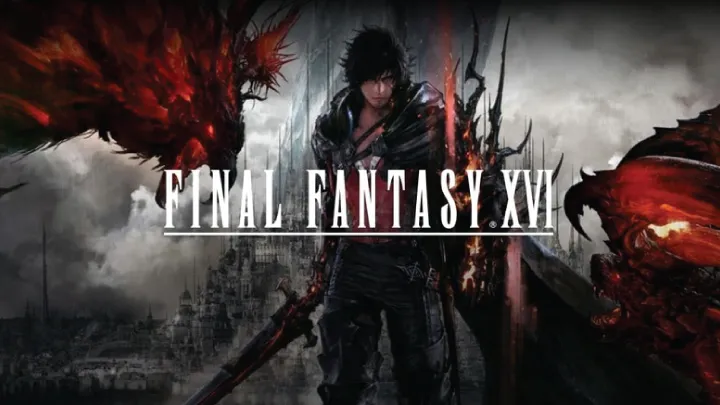
When players first step into the world of Valisthea, they are immediately struck by the sheer spectacle of combat—towering Eikons, cinematic clashes, and a fluid real-time system that marks a bold departure from traditional Final Fantasy gameplay. But beneath that visual brilliance lies a more contentious issue that has sparked debate among dedicated players: the balance (or imbalance) of abilities and how it affects combat identity.
This article does not aim to review the game broadly. Instead, it focuses on a specific and deeply impactful problem—how certain dominant abilities undermine build diversity, challenge scaling, and ultimately the long-term engagement of the combat system.
The Shift from Strategy to Spectacle
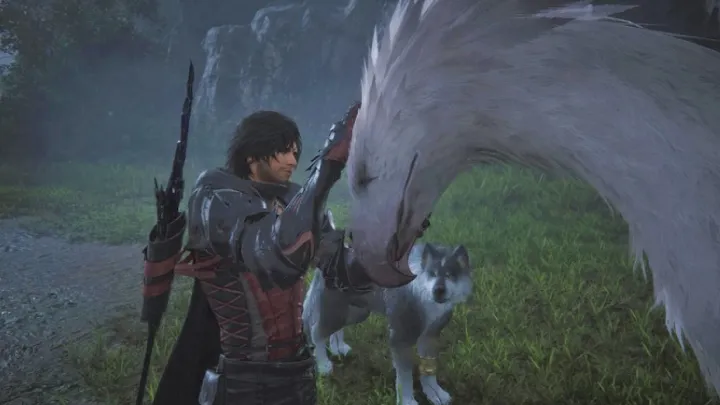
The combat system emphasizes accessibility and cinematic execution. Players control Clive in fast-paced encounters, chaining Eikon abilities with swordplay in a style closer to action games than traditional RPG systems. This makes the game immediately engaging and visually impressive.
However, this shift comes at a cost. When spectacle becomes the priority, strategic depth often takes a backseat. Instead of carefully planning encounters, players rely on flashy, high-impact abilities that deliver consistent results. Over time, this reduces the need for thoughtful decision-making.
The Emergence of “Meta” Builds
Soon after release, players began identifying optimal combinations of abilities—commonly referred to as “meta builds.” These builds maximize damage output while minimizing effort and risk.
The issue is not that meta builds exist, but that they dominate too strongly. When one approach clearly outperforms all others, player choice becomes limited.
Common Traits of Meta Builds
- High stagger damage
- Fast cooldown cycles
- Strong area-of-effect coverage
- Easy execution
These traits make certain builds universally effective, reducing the incentive to experiment.
Eikon Abilities: Variety Without Equality
The game offers a wide range of Eikon abilities, each designed to support different playstyles. On paper, this suggests a deep and flexible combat system.
In practice, however, not all abilities are equally viable. Some are clearly more efficient, offering better damage, faster cooldowns, or more consistent utility. Others feel situational or underpowered.
Example Issue
A high-damage skill with moderate cooldown often outperforms a niche utility ability. Players naturally gravitate toward efficiency, leaving much of the ability pool underused.
Cooldown Design and Its Consequences
Cooldowns are meant to create rhythm and pacing in combat. Ideally, players should think carefully about when to use each ability.
But when certain abilities offer both high damage and short cooldowns, that rhythm breaks down. Combat becomes repetitive—players cycle through the same optimal skills without needing to adapt.
This reduces engagement and makes encounters feel predictable over time.
The Stagger System: A Double-Edged Sword
The stagger system is one of the core mechanics, rewarding players for breaking enemy defenses and dealing massive damage during a short window.
In theory, this encourages strategic planning. In practice, dominant abilities can trivialize it. Players can quickly fill the stagger bar and unleash overwhelming damage, skipping intended challenge phases.
Impact on Gameplay
- Boss fights become shorter and less dynamic
- Difficulty scaling becomes less meaningful
- Combat turns into repetition rather than adaptation
Difficulty Modes and Balance Disconnect
The game includes multiple difficulty levels, including modes aimed at experienced players. However, these modes do not fully address the balance issues.
Instead of encouraging new strategies, higher difficulty often just increases enemy durability and damage. This unintentionally reinforces the dominance of already optimal builds.
As a result, players are pushed even further toward a narrow set of strategies.
Accessibility vs Depth: A Design Trade-Off
One of the game’s biggest strengths is its accessibility. New players can quickly understand the combat system and feel powerful.
But this accessibility limits depth. Once players discover the most effective strategies, there is little incentive to explore further.
The problem is not accessibility itself, but the lack of systems that reward mastery beyond basic execution.
Player Psychology and Optimization Behavior
Players naturally seek efficiency. When the game clearly signals which options are best, most players will adopt those strategies.
This is not a flaw in player behavior—it is a predictable outcome of system design. If multiple options are not equally viable, players will converge on the strongest ones.
The responsibility lies in designing systems that encourage diversity and experimentation.
Missed Opportunities for Build Diversity
The foundation for a rich build system is already present—multiple Eikons, customizable abilities, and flexible combat mechanics.
However, the imbalance prevents this system from reaching its full potential. Many abilities feel like they exist only for variety, not for meaningful gameplay impact.
Potential Improvements
- Strengthen underused abilities
- Introduce enemies that counter dominant strategies
- Adjust cooldowns to create real trade-offs
- Reward creative playstyles
These changes could significantly improve replayability and player engagement.
Long-Term Impact on Player Engagement
Initially, the combat feels exciting and dynamic. But over time, the lack of balance reduces long-term interest.
When every encounter can be solved with the same approach, the sense of discovery fades. Players may continue for the story, but the gameplay loses its depth.
For a game of this scale, maintaining engagement beyond the first playthrough is crucial.
Conclusion
The combat system in Final Fantasy XVI is visually stunning and immediately satisfying, but its underlying balance issues limit its long-term potential. Dominant abilities overshadow others, reducing build diversity and weakening the strategic depth that could have made the system truly exceptional.
By addressing these imbalances, the game could evolve from a visually impressive experience into a deeply engaging and replayable one.