.webp)
Peglin Tips & Guide: The Complete Beginner to Endgame Strategy Handbook

Introduction
Peglin is a roguelike RPG that combines pachinko-style physics with deck-building, turn-based combat, relic collection, and procedural exploration. You control a small goblin-like character who attacks enemies by launching orbs into a board filled with pegs. Each shot can trigger critical hits, bombs, special effects, and powerful combinations, making every battle feel different.
Although the basic concept is easy to understand, Peglin becomes surprisingly strategic as difficulty increases. Choosing the right orbs, managing your relics, understanding peg layouts, and deciding when to take risks can determine whether a run succeeds or ends unexpectedly.
New players often focus only on hitting as many pegs as possible. However, advanced play requires much more careful planning. This guide covers the most important strategies for progressing from your first runs to challenging endgame encounters.
1. Learn How Peg Damage Works
The first thing to understand in Peglin is that your damage depends heavily on how efficiently you interact with the board.
Simply launching an orb toward the largest cluster of pegs isn't always the best option. You should consider the path of the orb, which pegs will refresh, and whether you can reach critical or special targets.
Basic Shot Priorities
- Look for critical pegs.
- Activate bombs when they provide useful area damage.
- Avoid wasting strong orbs on weak enemies.
- Plan where the orb will finish.
Why Peg Order Matters
Each peg hit can change the board for the rest of the shot.
A good opening bounce may create a much stronger final result than simply aiming at the nearest enemy.
With practice, you'll begin predicting the trajectory instead of relying entirely on luck.
2. Build a Small and Powerful Orb Collection
One of the biggest mistakes beginners make is collecting every orb they encounter.
Having more options sounds useful, but an oversized collection can make your best attacks appear less frequently.
Focus on Synergy
Instead of asking whether an orb is powerful by itself, consider how it interacts with the rest of your collection.
For example, a build focused on critical hits benefits greatly from orbs and relics that increase critical damage or improve critical activation.
Good Collection Principles
- Remove weak orbs when possible.
- Keep reliable damage options.
- Avoid excessive duplicates.
- Build around your strongest relics.
A focused orb collection creates much more consistent runs.
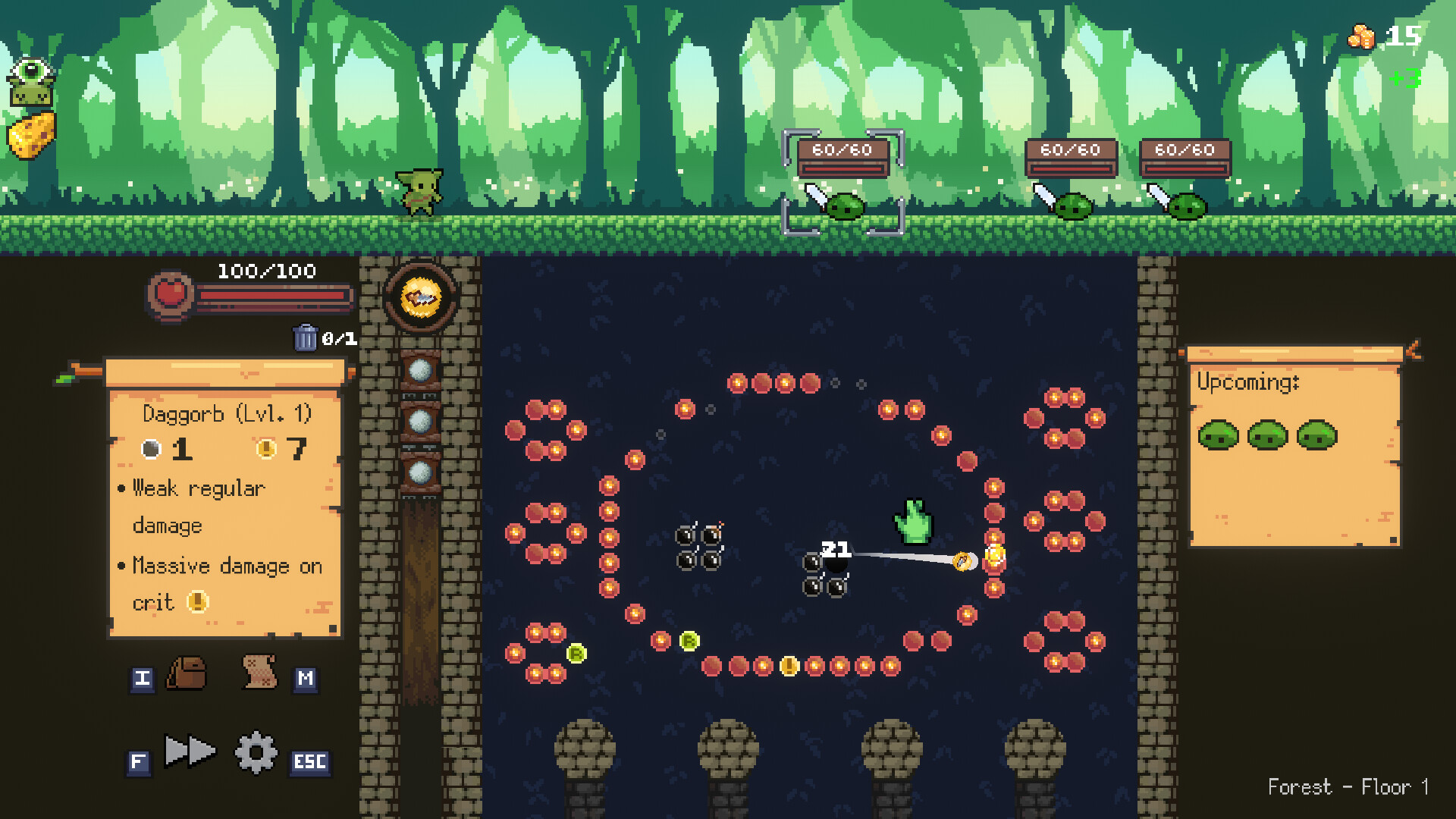
3. Understand Critical Pegs
Critical pegs can completely change a battle.
A normal attack may deal reasonable damage, while the same orb passing through a critical peg can eliminate an enemy immediately.
Learning when and how to reach critical pegs is therefore an essential skill.
Critical Hit Tips
Look for Safe Routes
Don't automatically choose a critical path if it causes the orb to miss important targets.
Combine Criticals With Strong Orbs
A powerful orb becomes considerably more valuable when paired with critical damage.
Consider Refresh Pegs
A refresh can extend the shot and create additional opportunities for critical hits.
The best players constantly evaluate whether a shot can create multiple effects rather than focusing on one target.
4. Use Refresh Pegs Strategically
Refresh pegs are among the most important elements on the board.
They restore spent pegs and can dramatically increase the length and effectiveness of an attack.
However, their position matters.
Refresh Strategy
Try to plan shots that reach a refresh after already activating several useful pegs.
This can create a chain where the orb continues interacting with the board for much longer than expected.
Common Mistake
Don't immediately aim for a refresh simply because it is available.
Sometimes the best move is to hit damage or critical pegs first and reach the refresh later.
Timing is more important than simply activating the mechanic.
5. Choose Relics Based on Your Build
Relics provide some of the strongest passive effects in Peglin.
A single powerful relic can completely change how you approach combat.
Many beginners choose relics based only on their individual strength without considering synergy.
Relic Selection Questions
Before choosing a relic, ask:
- Does it improve my current orb collection?
- Does it support my main damage strategy?
- Will it remain useful later?
- Does it solve a weakness in my build?
Strong Synergy Examples
A critical-focused build benefits from critical-related relics, while a bomb-focused build should prioritize effects that improve bomb activation or damage.
Build around what you already have instead of constantly changing direction.
6. Manage Your Health Carefully
Health is one of the most valuable resources during a run.
A single difficult encounter can leave you too weak to survive the next stage.
Many players become overly aggressive because they want to finish battles quickly.
Health Management Tips
- Avoid unnecessary damage.
- Prioritize dangerous enemies.
- Take healing opportunities when appropriate.
- Don't choose risky paths without a good reason.
Risk Versus Reward
A route offering a powerful reward may also contain difficult encounters.
When your health is already low, the safest route is often better than the most profitable one.
Surviving is always more valuable than obtaining one additional relic.
7. Learn Enemy Priorities
Not every enemy needs to be attacked in the same order.
Some enemies can deal massive damage if left alive, while others are relatively harmless.
Target Priority
Generally, eliminate enemies that:
- Deal extremely high damage.
- Have dangerous special abilities.
- Can attack multiple times.
- Are difficult to deal with later.
Don't Waste Damage
If an enemy is nearly defeated, avoid using your strongest possible orb unless necessary.
Saving powerful resources for the next threat can make the entire encounter easier.
Good target selection is one of the easiest ways to improve survival.
8. Choose Your Map Path Carefully
Peglin's procedural map means every run presents different opportunities.
Choosing a route randomly can lead to poor rewards or difficult encounters that don't fit your build.
When Choosing a Path
Consider:
- Your current health.
- Your orb collection.
- Your relics.
- Available healing.
- Upcoming elite encounters.
- Potential rewards.
High-Risk Routes
Elite encounters can provide valuable rewards but should be approached carefully.
If your build is already strong and your health is high, taking additional risks may be worthwhile.
If your build is weak, prioritize stability instead.
9. Prepare for Boss Encounters
Bosses are major tests of your build.
A strategy that works perfectly against normal enemies may struggle against a boss with unusual mechanics.
Boss Preparation
Before entering a boss encounter:
- Make sure your strongest orbs are upgraded.
- Remove unnecessary weak options.
- Check your health.
- Consider your relic synergy.
- Save powerful effects for critical moments.
During the Fight
Don't rush.
Study the boss's behavior and identify safe opportunities to deal damage.
Sometimes a slower attack that guarantees a strong combination is better than a risky shot with higher potential damage.
10. Optimize Your Endgame Builds
At higher difficulty levels, small mistakes become much more expensive.
Successful runs usually have a clear identity rather than a random collection of strong effects.
Strong Build Concepts
Critical Build
Focus on critical pegs, critical damage, and effects that improve orb consistency.
Bomb Build
Use relics and orbs that increase bomb frequency and effectiveness.
Refresh Build
Focus on keeping the board active and maximizing the number of peg interactions.
Balanced Build
Combine reliable damage, critical effects, defensive tools, and utility.
Advanced Tips
Don't Chase Every Upgrade
A new orb isn't automatically better than what you already have.
Build Around Your Best Relic
If you obtain a powerful synergy relic, adjust your orb collection to support it.
Keep Your Deck Consistent
The fewer weak options you have, the more frequently you'll draw your strongest tools.
Learn From Failed Runs
A failed run can reveal whether your problem was damage, survivability, poor route selection, or inefficient orb choices.
Conclusion
Peglin looks simple at first, but its combination of physics, roguelike progression, orb selection, and relic synergy creates a surprisingly deep strategy game. Success isn't determined solely by how many pegs you can hit. You need to understand board positioning, critical opportunities, refresh mechanics, enemy priorities, health management, and build synergy.
The most important lesson is to build with purpose. Keep your orb collection focused, select relics that complement your strategy, choose map routes based on your current condition, and avoid unnecessary risks when your run is already in danger. With enough practice, you'll begin reading the board more effectively and turning seemingly average shots into powerful chains.
Whether you're learning the game for the first time or trying to conquer higher difficulty levels, mastering these fundamentals will make your runs more consistent and give you a much better chance of surviving the toughest encounters.
Description (160 characters):
Complete Peglin guide covering orb builds, critical hits, relic synergy, refresh pegs, map routes, boss battles, health management, and endgame strategies.