



Introduction
The gaming industry has evolved into one of the most dynamic and influential entertainment sectors in the world. From competitive shooters to immersive open-world adventures, today’s top games are not just about fun—they represent innovation, community, and long-term engagement. Players are no longer satisfied with simple mechanics; they demand depth, replayability, and meaningful progression systems.
In this article, we will explore a curated selection of top games that dominate current trends. Instead of giving surface-level descriptions, we will dive deep into what makes these games successful, how they retain players, and why they stand out in a highly competitive market.
What Defines a “Top Game” in Today’s Market
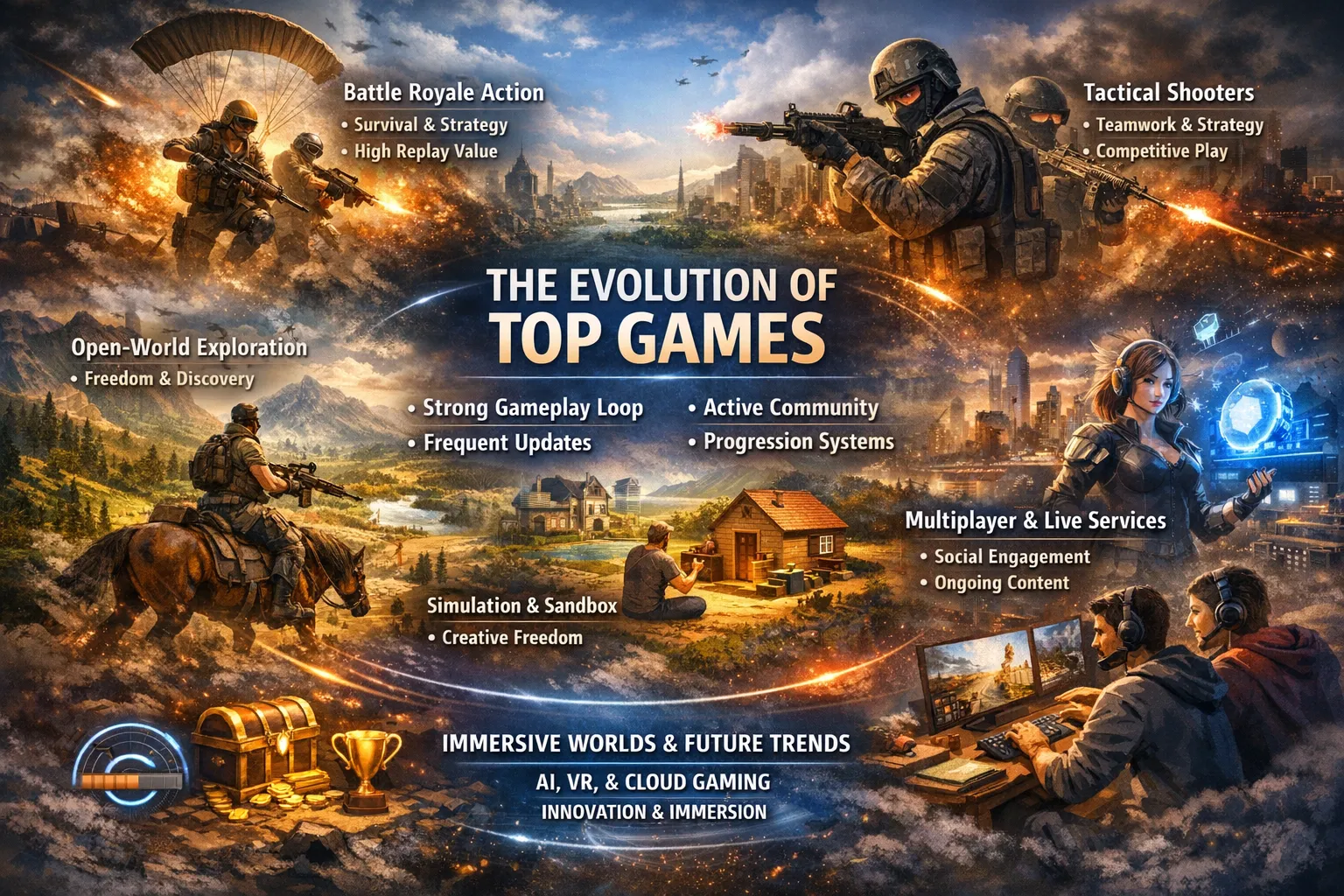
A top game today is not just about graphics or hype. It is defined by player retention, gameplay depth, and community engagement. Games that consistently rank high often share several characteristics: strong core mechanics, regular updates, and a loyal player base.
Another key factor is accessibility. Games that are easy to learn but difficult to master tend to perform better over time. This balance allows both casual and competitive players to enjoy the experience while still offering depth for long-term engagement.
- Strong gameplay loop
- Active community
- Frequent updates
- Balanced difficulty curve
Why Battle Royale Games Continue to Dominate
Battle royale games remain at the top due to their unpredictable and competitive nature. Each match feels different, creating a high replay value that keeps players coming back.
The survival aspect combined with shrinking play zones forces constant decision-making. Players must balance aggression and caution, which creates tension and excitement throughout every match.
Games in this genre succeed because they combine skill, strategy, and luck—making every victory feel earned.
The Rise of Tactical Shooters and Competitive Play
Tactical shooters have gained massive popularity due to their emphasis on strategy and teamwork. Unlike fast-paced shooters, these games require communication, planning, and precision.
Players are rewarded not just for aim, but for decision-making. Positioning, timing, and coordination often matter more than raw mechanical skill.
- Emphasis on teamwork
- Strategic gameplay
- High skill ceiling
- Competitive ranking systems
Open-World Games and the Freedom of Exploration
Open-world games offer players the freedom to explore vast environments at their own pace. This sense of autonomy is a major reason why they remain popular.
These games often include side quests, hidden secrets, and dynamic events that make the world feel alive. Players are not forced into a single path, allowing for personalized experiences.
The success of open-world titles lies in their ability to create immersive worlds that encourage curiosity and discovery.
Simulation and Sandbox Games: Creativity Without Limits
Simulation and sandbox games allow players to create, build, and experiment. Unlike structured games, these rely on player creativity rather than predefined objectives.
This genre appeals to players who enjoy long-term projects and experimentation. Whether it’s building cities or managing resources, the possibilities are nearly endless.
- High creative freedom
- Long-term engagement
- Player-driven goals
- Endless replayability
Multiplayer and Social Interaction in Modern Games
Modern games are increasingly focused on social experiences. Playing with friends or interacting with other players adds a new layer of enjoyment.
Multiplayer features not only improve engagement but also extend the lifespan of a game. Communities form around shared experiences, making the game more than just entertainment.
Games that successfully integrate social elements often see stronger player retention and growth.
The Importance of Progression Systems
A strong progression system keeps players motivated. Unlocking new abilities, items, or ranks creates a sense of achievement.
Games without meaningful progression often struggle to retain players. On the other hand, well-designed systems encourage long-term commitment.
- Leveling systems
- Unlockable content
- Skill progression
- Reward-based gameplay
Live Service Games and Continuous Updates
Live service games have become a dominant model in the industry. Instead of releasing a finished product, developers continuously update the game with new content.
This approach keeps the game fresh and relevant. Players always have something new to look forward to, which increases engagement.
Regular updates also allow developers to fix issues and respond to community feedback, improving the overall experience.
The Role of Graphics and Immersion
While gameplay is the most important factor, graphics and immersion still play a significant role. High-quality visuals enhance the experience and make the game world more believable.
However, graphics alone cannot sustain a game. They must be supported by strong mechanics and engaging content.
Immersion comes from a combination of visuals, sound design, and storytelling, creating a cohesive experience for the player.
How Game Design Influences Player Behavior
Game design directly impacts how players interact with a game. Mechanics, rewards, and challenges all shape player behavior.
Well-designed games guide players naturally without forcing them. They create a flow that keeps players engaged without frustration.
Understanding player psychology is key to creating successful games. Developers must balance challenge and reward to maintain interest.
Future Trends in the Gaming Industry
The future of gaming is focused on innovation and integration. Technologies like AI, cloud gaming, and virtual reality are shaping the next generation of experiences.
Players can expect more immersive worlds, smarter systems, and deeper interactions. The line between gaming and reality continues to blur.
The industry is moving toward experiences that are not just played—but lived.
Conclusion
Top games are not defined by popularity alone—they are defined by their ability to engage, challenge, and evolve. From competitive shooters to open-world adventures, each genre offers unique experiences that cater to different types of players.
Understanding what makes these games successful helps players choose better experiences and helps developers create more impactful titles. As the gaming industry continues to grow, one thing remains clear: the best games are those that combine creativity, strategy, and community into a cohesive and rewarding experience.